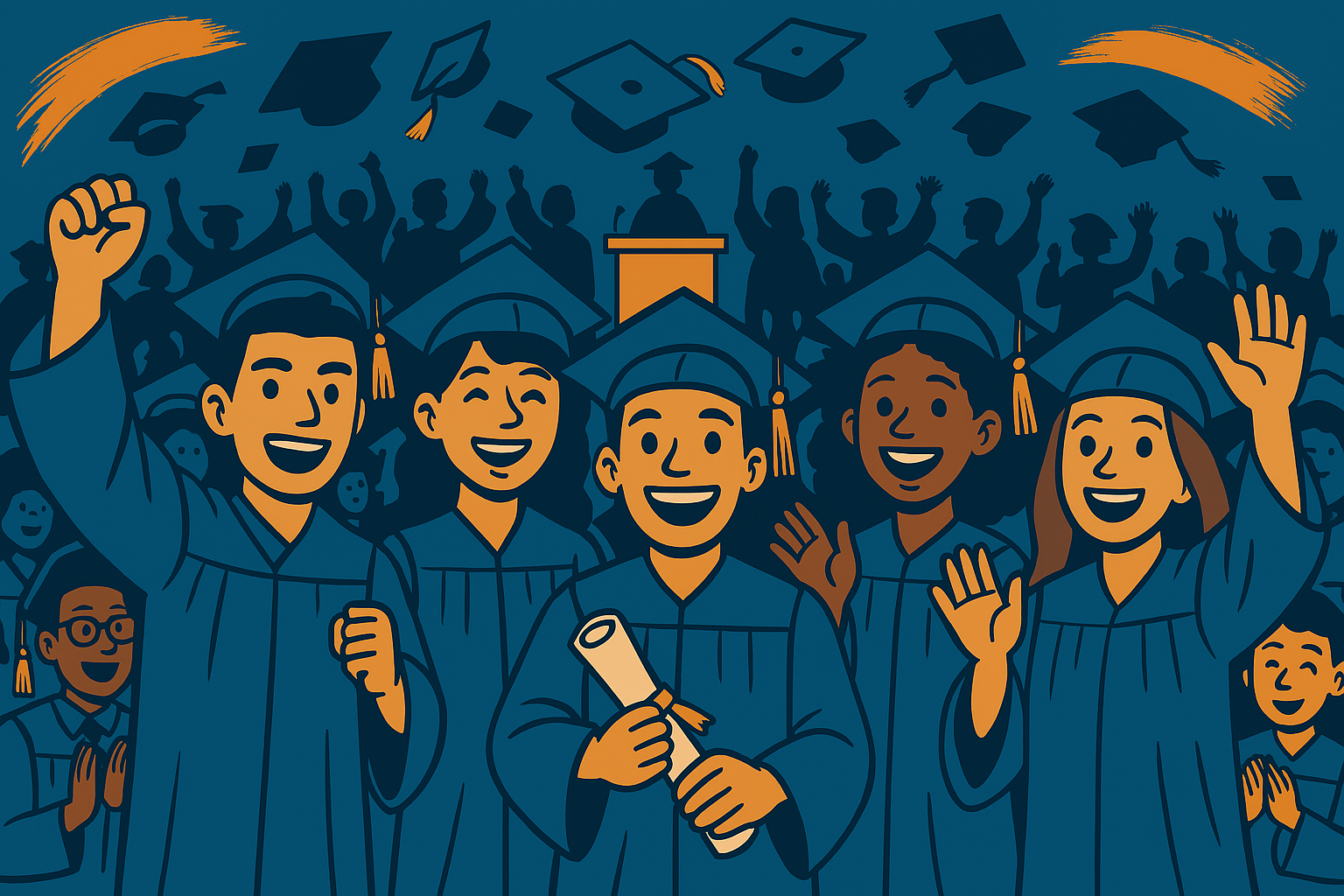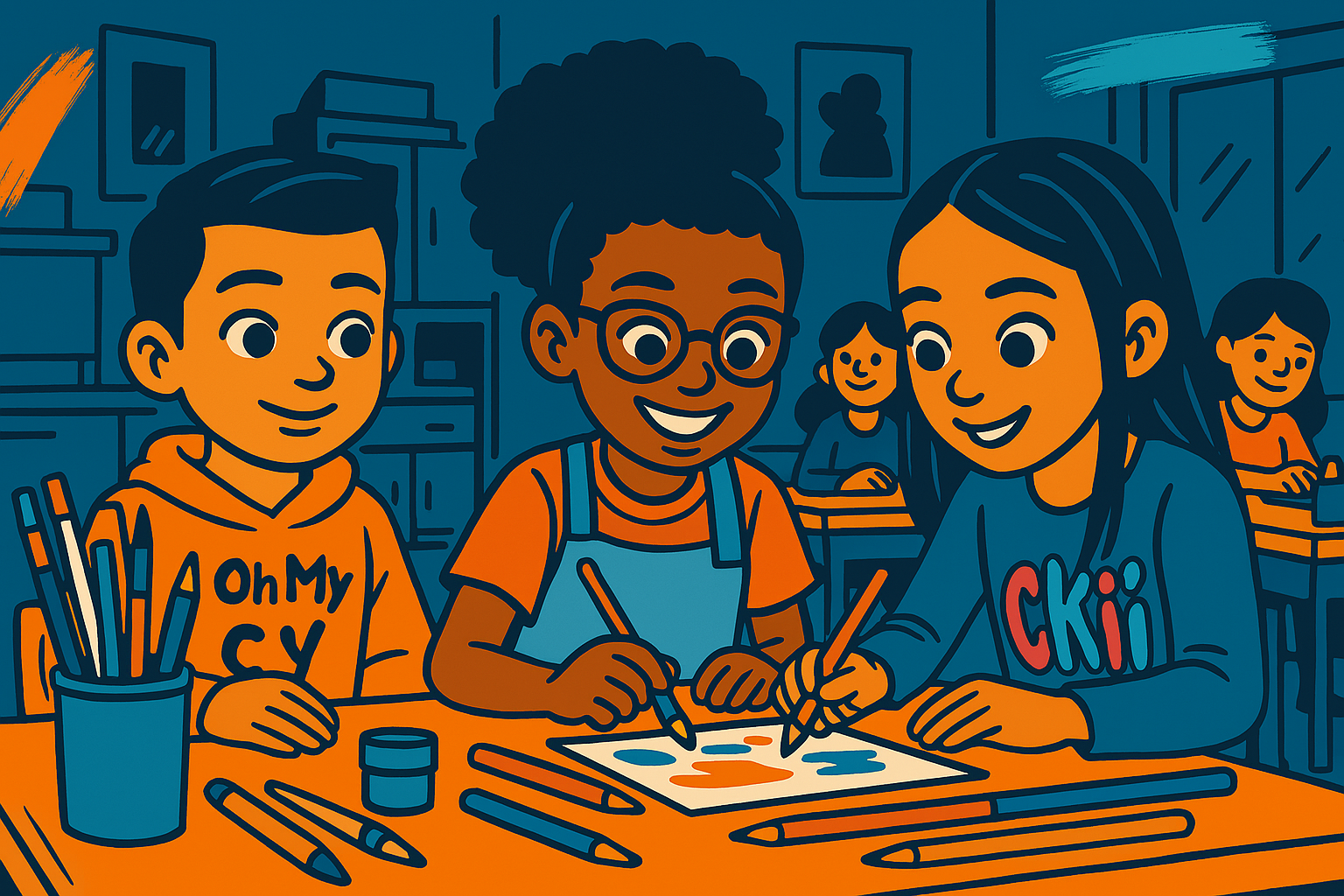
Art education doesn’t just inspire creativity—it improves outcomes. Across the country, studies have shown that access to quality arts learning correlates with stronger academic performance, better engagement, and higher graduation rates. For high school students especially, art classes can be a critical key to unlocking their full potential—academically, socially, and emotionally.
According to a 2019 report from the National School Boards Association (NSBA), eighth-graders who took art courses scored significantly higher in both reading and math than their peers who did not, regardless of race, gender, economic background, or learning barriers¹. This supports what educators and researchers have long understood: art builds the brain. It fosters skills like critical thinking, creative problem-solving, focus, and communication—core tools that translate across every academic subject.
But the benefits don’t end with test scores. Art education has also been tied to higher long-term academic attainment. A study by the National Endowment for the Arts (NEA) revealed that students who experienced intensive arts learning in high school were three times more likely to earn a bachelor’s degree than students with minimal arts exposure². These students also performed better in college-level English and writing courses—proof that arts education lays the foundation for success well beyond graduation.
Perhaps most strikingly, the arts help keep students in school. Multiple studies have shown that arts participation reduces dropout rates, particularly for students from underserved communities³ ⁴. According to the Center for Arts Education, schools with strong arts programs often see higher graduation rates than those without⁴. The same report found that when student participation in the arts increased, dropout rates decreased—especially in urban schools with limited resources.
So why does this work? Because the arts provide more than just a subject—they provide connection, confidence, and a sense of belonging. Arts programs give students the chance to express themselves, explore who they are, and feel seen in the classroom. For many, it’s the reason they stay engaged.
At First Pass, we see these outcomes firsthand. That’s why we’re committed to helping under-resourced schools build creative programs that don’t just inspire—they empower. Whether it’s through targeted funding, classroom murals, curriculum support, or visual identity enhancements, we believe every student deserves access to the kind of learning that helps them succeed.
Far from being an elective, art is essential.
References
Center for Arts Education. Staying in School: Arts Education and New York City High School Graduation Rates. 2009.
National School Boards Association. Data from the Nation’s Report Card: Arts Education and Academic Achievement. 2019.
National Endowment for the Arts. The Arts and Achievement in At-Risk Youth: Findings from Four Longitudinal Studies. 2012.
Deasy, Richard J., ed. Critical Links: Learning in the Arts and Student Academic and Social Development. Arts Education Partnership, 2002.